
Real time stock
control.
Track ingredients, stock movement, supplier balances and expiry risk across every restaurant location with precision and ease.
- Live stock
- Low-stock alerts
- Ingredients
- Transfers
- Adjustments
- Supplier ledger
- Expiry tracking
Stock Health Overview
Total Items
4,250
Inventory Value
$156,400.50
Low-stock Items
8
Out-of-stock
2
Live Stock Monitor
Sample figures shown for illustration.
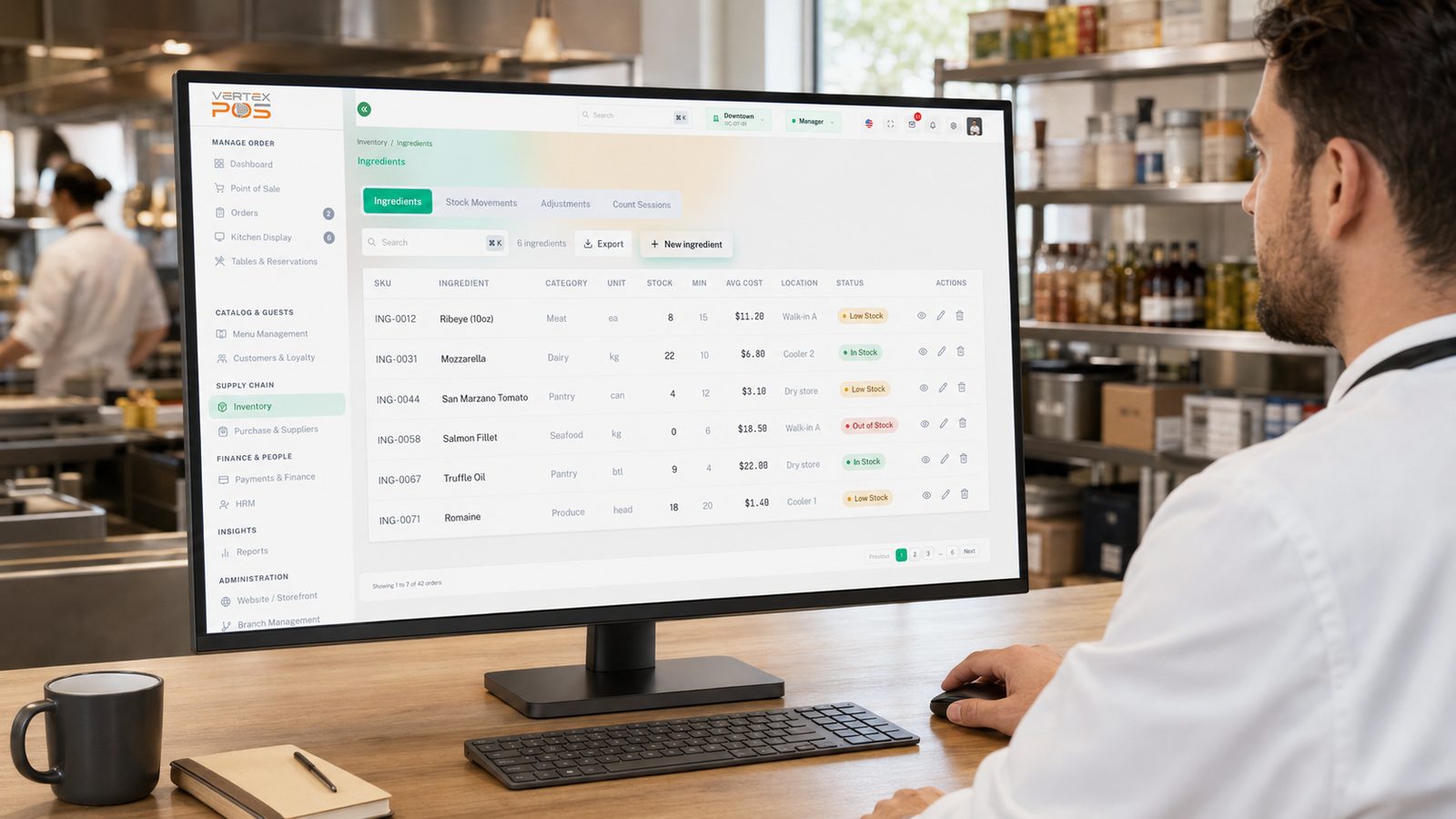
Ingredient & Recipe Control
Connect your inventory directly with your kitchen output. As plates are sold, stock levels are automatically adjusted based on your recipe measurements, giving you a clear picture of your theoretical vs. actual usage.
- Real-time cost per plate calculation
- Automatic stock depletion on POS integration
- Wastage tracking at the ingredient level
Precision Movements
Control every stock transfer between locations and warehouses with automated approval workflows and real-time transit tracking.
Inter-branch Transfers
Initiate stock requests from one venue to another. Track ‘In Transit’ states and require digital signatures upon receipt, so every hand-off leaves an audit trail.
Active transfer
In transit
From
Central Warehouse
To
Downtown Bistro
Sample transfer shown for illustration.
Stock Adjustments
Record waste, breakage, or promotional usage with mandatory reason codes and manager approval gates to maintain strict inventory integrity.
- Breakage
- Wastage
- Promotional
- Returned
Supplier & Expiry Intelligence
Supplier Ledger
Tidecrest Seafood Co.
Due Sep 5
$1,250.00
Pending invoice
Fernhollow Organic Farms
Paid Aug 3
$342.15
Settled
Batch #4421
Fresh Atlantic Salmon
Expires in 18 hours
Batch #3108
Truffle Cream
Expires in 3 days
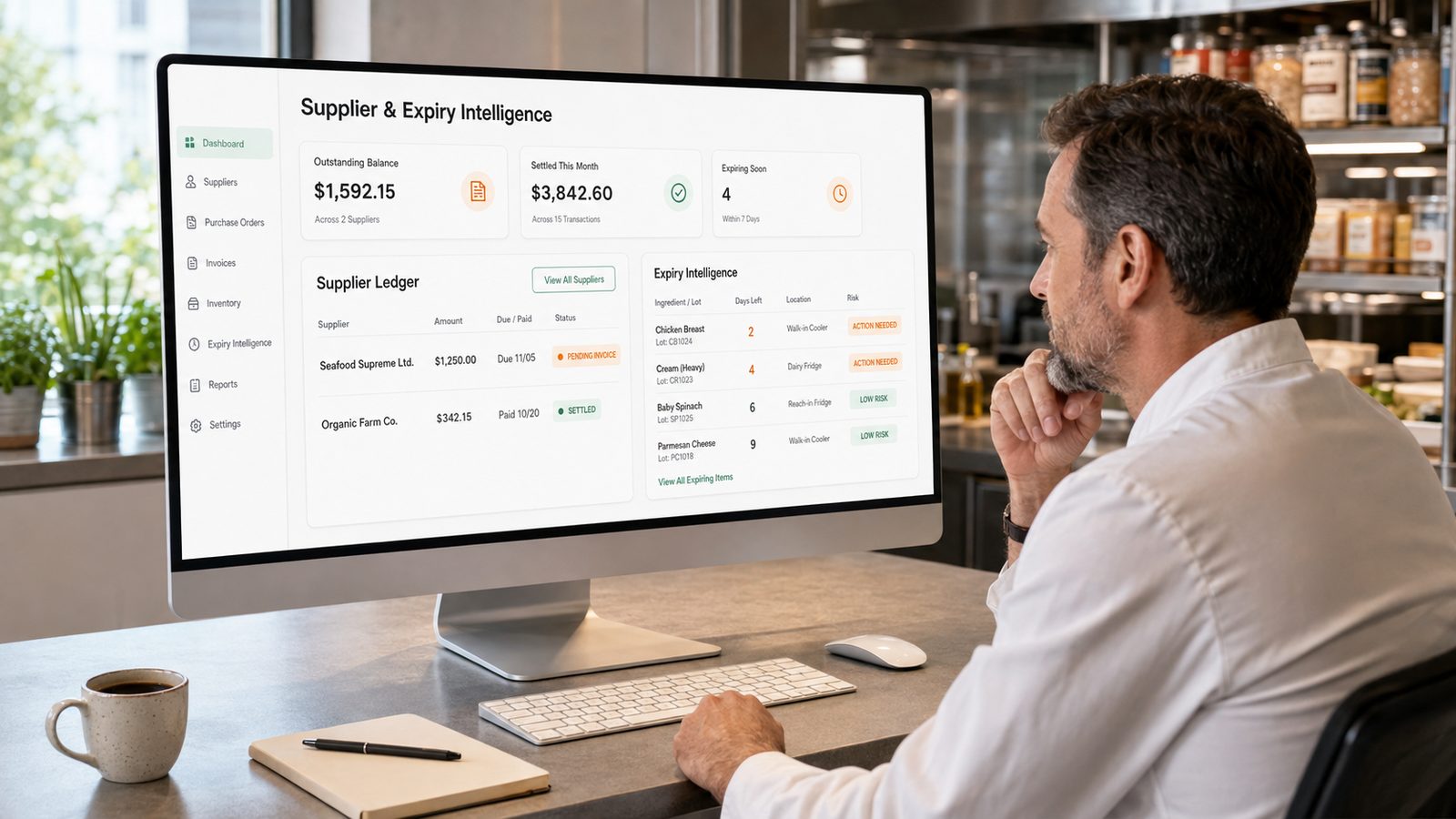
Sample suppliers, batches and figures shown for illustration.
Physical Count &
Reconciliation
Bridging the gap between what the system says and what’s actually on the shelf. Conduct rapid digital stocktakes on tablets and reconcile variances in the same session.
- 01
Guided Count Order
The system organizes count sheets by kitchen area or storage unit so teams move through a stocktake in a sensible order.
- 02
Instant Variance Reports
Spot missing items as soon as a count is submitted. Vertex calculates the financial impact of shrinkage and waste for you.
Variance Analysis
Last count: yesterday, 4:00 PM
Total variance
-$120.00(0.5%)
| Category | Variance value |
|---|---|
| Wine & Spirits | -$85.00 |
| Protein & Meat | -$35.00 |
| Dry Goods | $0.00 |
Sample figures shown for illustration.
Frequently Asked Questions
It puts live stock levels, ingredient recipes, stock movements, supplier balances and physical counts in one place rather than across a spreadsheet, a clipboard and a folder of delivery notes. The stock health view shows total items, inventory value and how many lines are running low or have gone out of stock, with a live monitor listing each ingredient's quantity on hand, the quantity reserved against open tickets and what is genuinely still available. Around that sit low-stock alerts, ingredient and recipe costing, inter-branch transfers, reason-coded adjustments, a supplier ledger and expiry tracking. Every figure shown on this page is illustrative sample data used to show the shape of the screens, not a result we are projecting for your venue.
Through the recipe. You define the measurements for each dish, and when the POS records a sale the linked ingredients are depleted by those quantities and the cost per plate is recalculated. That gives you a theoretical usage figure — what the recipes say should have been consumed — which you can hold against actual usage from your counts. The gap between the two is the number worth looking at, and it is a prompt to investigate over-portioning, unrecorded waste or a stale recipe rather than a verdict on any of them. The quality of that signal depends on your recipes being kept current and your yields being entered honestly: if a recipe is out of date, the depletion calculated from it will be out of date too.
It does not, and we would rather you did not rely on it that way. Vertex records the batch and lot detail you enter, tracks expiry dates against it and surfaces what is closest to its date — an eighteen-hour window on one batch, three days on another — so items needing attention are visible before service rather than after. That is a record-keeping and prompting tool to support the process you already run. It does not inspect your stock, judge whether something is fit to serve, manage allergen information or implement HACCP, and it makes no determination about your obligations under local food-safety law. Deciding what your controls should be, following them and confirming your position remains yours, together with your food-safety adviser or environmental health officer. The records are also only as good as what gets entered — a delivery received without being logged will not show up in expiry tracking.
Both are recorded as movements with someone's name attached. A transfer is raised as a stock request from one venue to another, carries an 'In Transit' state while it is moving and takes a digital signature on receipt, so a difference between what was sent and what arrived is attributable to a point in the chain instead of surfacing as an unexplained shortfall weeks later. Adjustments require a reason code — breakage, wastage, promotional or returned — and pass through a manager approval gate before they land. The point of that workflow is an auditable trail and fewer silent write-offs, not a claim that stock stops going astray; what you get is a record of who moved what, when, and why they said they did it.
Yes. Counting the shelf is a manual job your team performs — Vertex organises and records it rather than doing it for you. The system builds a guided count order that groups the count sheet by kitchen area or storage unit so a counter works through one room at a time instead of criss-crossing the building, the numbers are entered on a tablet during the stocktake, and the result is reconciled against the system figure straight away. What comes back is a variance report broken down by category with the financial impact attached, which is usually where shrinkage and unrecorded waste become visible. The count itself, its frequency and its honesty are still yours to own.
The ledger tracks what you owe and to whom: supplier balances, invoice amounts, due dates and settlement status, so an outstanding invoice sits next to the stock it paid for rather than in a separate pile. Purchase and invoice records are entered and maintained in Vertex, and stock data can be exported from the monitor view. What this page does not claim is an integration — there is no supplier EDI feed, no ordering connection into a distributor's system and no accounting-package sync described here — so treat the ledger as your own record of supplier activity, and check with us about anything you need to move into another system before you plan a workflow around it.

Ready to take control of your stock?
See how Vertex tracks stock across your outlets, flags low and expiring batches early, and keeps counts, transfers and purchase orders in one place.