
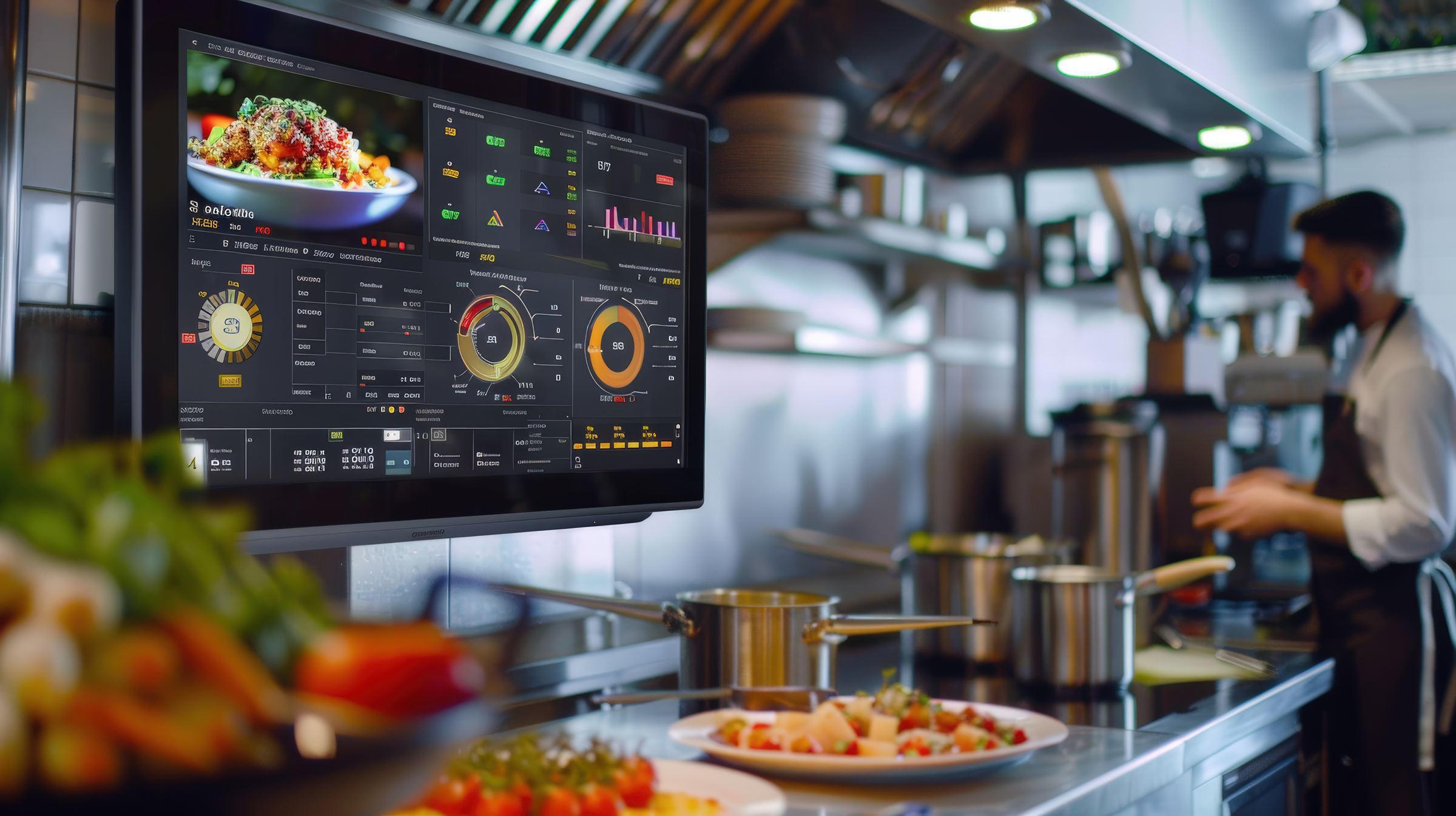
Control recipe costs and kitchen consistency.
Define ingredient quantities, costing and preparation instructions for every product. Link to inventory for automatic stock deduction on each sale.
- Recipe definitions
- Batch production
- Usage tracking
- Ingredient costing
Standardize Every Dish
Create a single source of truth for your kitchen. Define precise measurements, yields, and portioning rules that ensure consistency across every location.
- Dynamic unit conversion (e.g., Grams to Cases)
- Visual step-by-step plating guides
Wagyu Beef Burger
Active Recipe- Brioche Bun
- 1.0 Unit
- Wagyu Patty (200g)
- 0.45 Kg
- Truffle Aioli
- 15.0 ml
- Yield per Batch
- 24 Servings
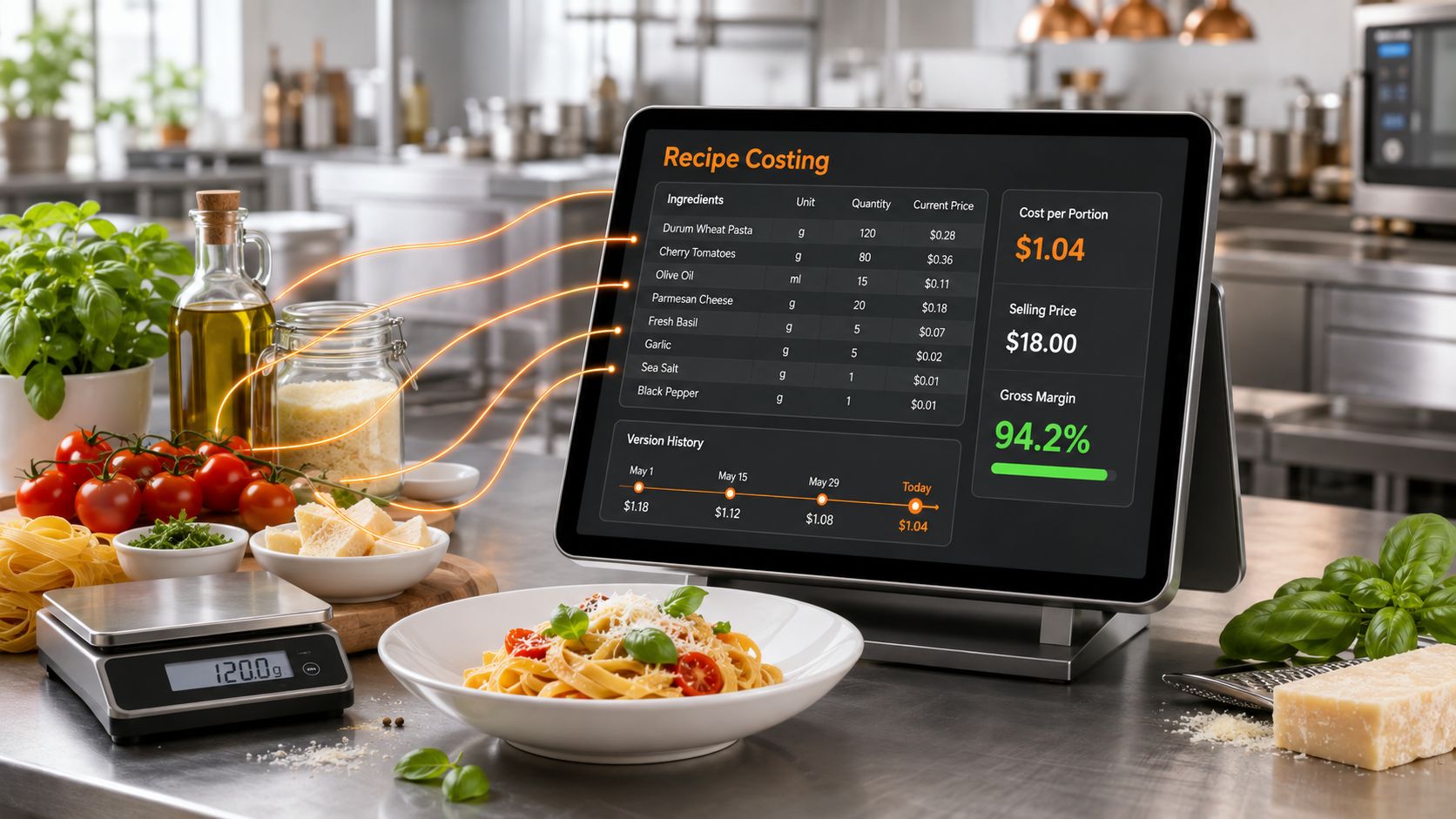
Know the exact cost of every dish you serve.
Build a recipe for every product with ingredients, quantities, units and preparation steps. Cost per serving is calculated automatically from current ingredient prices.
- Ingredient list with unit, quantity and current price
- Auto-calculated cost per portion
- Gross margin display vs. selling price
- Version history with cost change tracking
Financial Guardrails for your Kitchen
Visibility into cost changes before they impact your P&L. Compare planned usage against actual kitchen performance.
| Ingredient | Theoretical Qty | Actual Qty | Unit Cost | Margin Impact |
|---|---|---|---|---|
| Extra Virgin Olive Oil | 45.5 L | 48.2 L | $12.40 | Up 2.4% |
| Grade-A Butter (Salted) | 120.0 Kg | 118.5 Kg | $8.15 | Down 1.1% |
| Japanese Scallops (U-10) | 12.0 Kg | 12.0 Kg | $42.00 | Neutral |
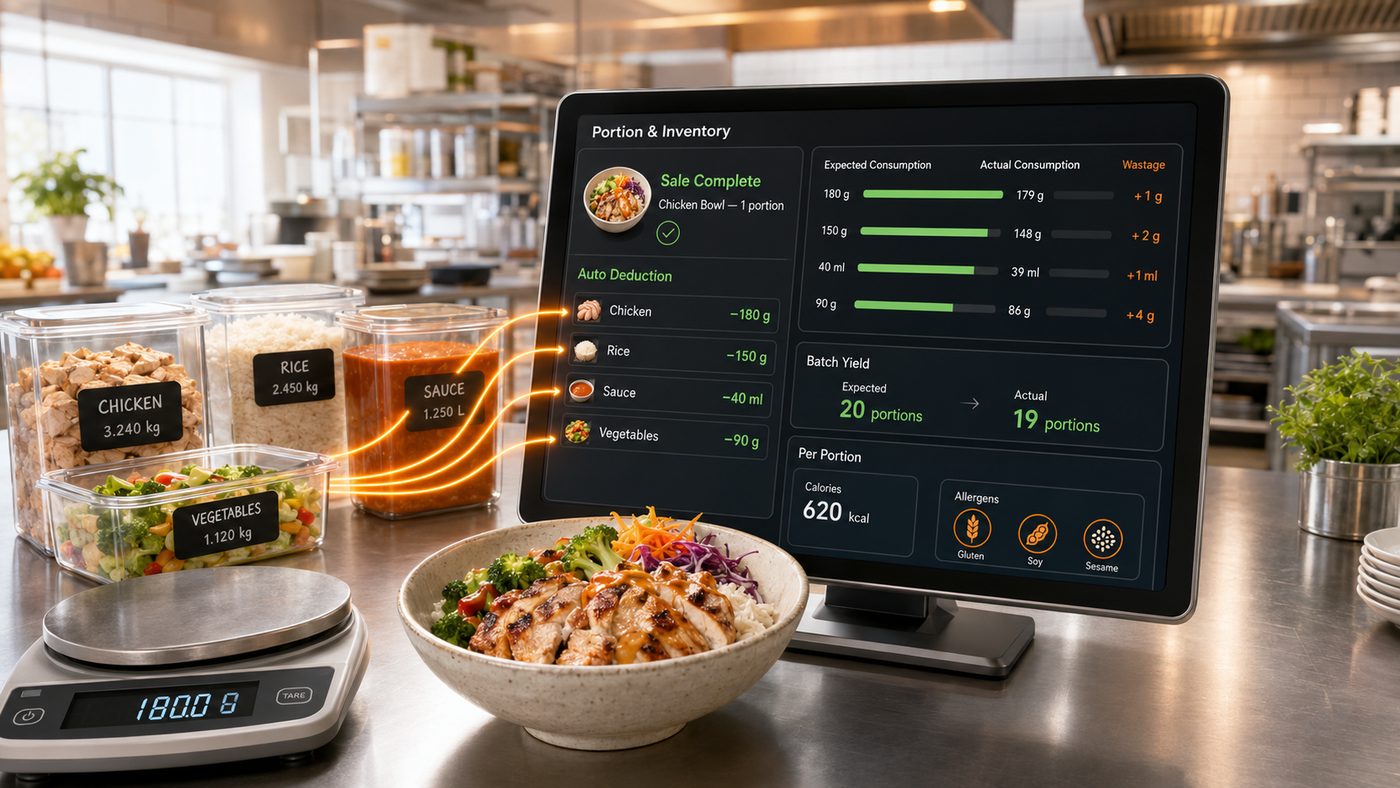
Sell a dish, deduct the ingredients automatically.
When a product is sold, configured recipe quantities are deducted from linked inventory items. Track wastage against expected consumption.
- Auto deduction on sale based on recipe quantities
- Wastage vs. expected consumption tracking
- Recipe yield adjustment for batch products
- Allergy and nutritional information per portion
Frequently Asked Questions
Build a recipe for every product with ingredients, quantities, units and preparation steps, so the kitchen works from a single source of truth. Recipes hold the precise measurements, yields and portioning rules that keep a dish consistent across every location, and dynamic unit conversion — grams to cases, for example — along with visual step-by-step plating guides are supported.
Cost per serving is calculated automatically from current ingredient prices. Each recipe shows its ingredient list with unit, quantity and current price, an auto-calculated cost per portion, and a gross margin display against your selling price. Version history tracks cost changes over time, so you can see how a portion cost has moved instead of discovering it at month end.
Yes, when recipes are linked to inventory items. As soon as a product is sold, the configured recipe quantities are deducted from the linked inventory items, so stock reflects what the kitchen actually served without a separate entry step. That auto deduction on sale is what makes usage tracking possible from ordinary service.
Usage tracking compares planned usage against actual kitchen performance. A theoretical-versus-actual view lists each ingredient with its theoretical quantity, actual quantity, unit cost and margin impact, and wastage is tracked against expected consumption. The point is visibility into cost changes before they land on your P&L.
Batch production is supported. A recipe can carry its own yield per batch — a build that produces 24 servings, for instance — and recipe yield adjustment for batch products is available when configured, so an item prepped in bulk still costs and deducts correctly on a per-portion basis.
Allergy and nutritional information can be recorded per portion, so the details you hold for a dish live alongside the recipe that defines it and change when that recipe changes. Vertex manages this as recipe data you maintain — it does not verify ingredient declarations from suppliers and is not a substitute for your own allergen checks and kitchen procedures.

Ready to know what every dish really costs?
See how Vertex standardizes every recipe, deducts ingredients from inventory on each sale, and shows you where your margins are slipping.