
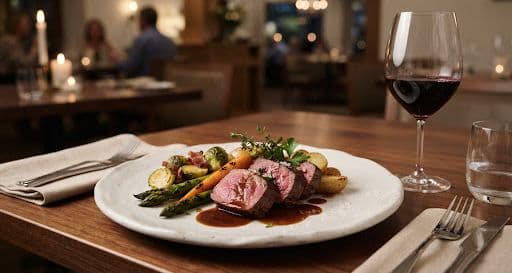
 Staff Pick
Wagyu Beef Entrée × Bodega Tres Faroles Malbec
The high marbling of the A5 Wagyu is balanced by the dark fruit acidity and structured tannins of this 2019 vintage.
House pairing · saved by your team
Browse by
Take Orders
6 featuresSee Vertex POS in Action
Explore how Vertex manages ordering, inventory, kitchen, payments and customer engagement all in one platform.
Book DemoGrow your business by reselling or integrating with Vertex. Partner with us
Browse by
Fine Dining
4 featuresFind Your Perfect Fit
Whether you run one outlet or five hundred, Vertex adapts to your service model.
Talk to an ExpertBrowse by
Learning
4 features2025 Restaurant Tech Guide
Download our definitive 40-page guide to choosing, implementing and scaling restaurant technology.
Download FreeBrowse by
Company
4 featuresBecome a Vertex Partner
Grow your business by reselling or integrating with Vertex.
Apply NowLearn More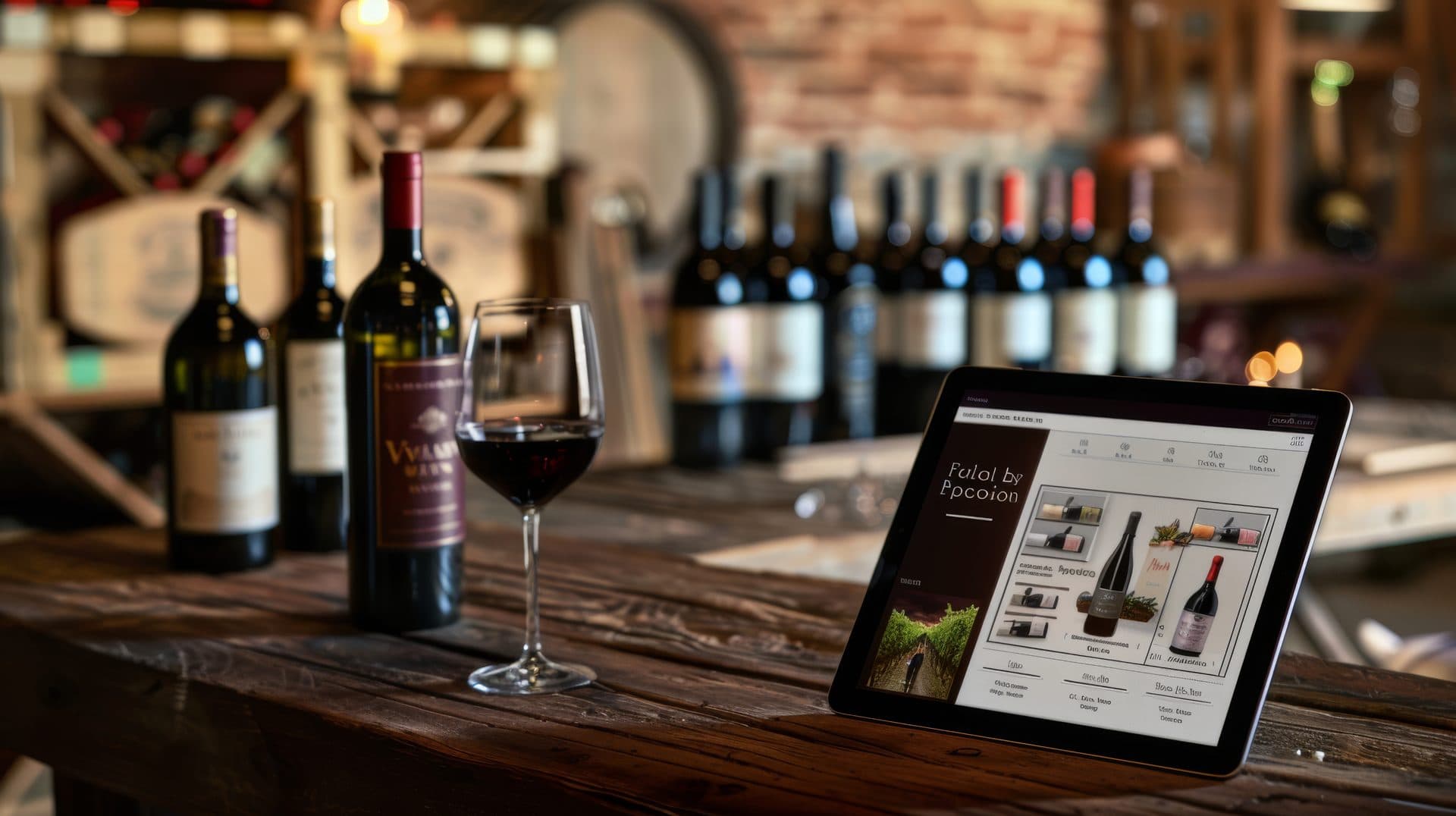
Manage vintages, cellar stock, open bottles and by-the-glass service while connecting beverage recommendations with your menu.
Granular control over your entire collection, from rare magnums to daily service bottles.
| Wine | Producer | Vintage | Bottle size | Location | Stock level |
|---|---|---|---|---|---|
| Cabernet Sauvignon | Quarry Bench Vineyards | 2018 | 750ml | Vault A | In stock: 14 bottles |
| Pinot Noir, Gevrey-Chambertin | Domaine Valcourt | 2020 | 750ml | Reserve Cellar | Low stock: 2 bottles |
| Bordeaux Blend, Margaux | Château Lansec | 2015 | 1.5L Magnum | Main Cellar | In stock: 8 bottles |
Sample figures shown for illustration. Producer names are fictional.
Stop guessing how many glasses are left. Log every pour against the open bottle, and let a freshness timer prompt a check before the wine goes off.
Open 4h · Main Bar
Hollowbrook Ridge Pinot Noir
750ml bottle, poured at 150ml — 5 glasses a full bottle.
Counts come from the pours staff key in, not from measuring the liquid.
Fresh— open 4h of a 12h window.
Next prompt at 8h open
The timer counts hours since the bottle was opened. It prompts a taste check; it does not test the wine.
| Source | Pours |
|---|---|
| Recorded on tickets | 19.5 |
| Implied by bottle count | 19.0 |
-0.5 poursshort of what the tickets recorded — roughly 75ml to account for.
A suggestion only — a manager approves any change before it reaches the list. At the current price, 5 glasses come to $90.00 a bottle.
Sample figures shown for illustration.
Pairing notes are written by your own team and stored on your wine list. Vertex surfaces the right note beside the dish when a server takes the order — the suggestions stay yours.
Staff PickThe high marbling of the A5 Wagyu is balanced by the dark fruit acidity and structured tannins of this 2019 vintage.

2021 Domaine Blanchevigne Chablis Premier Cru.
Floral & saline

Château Verlune 2017 Sweet Wine.
Citrus synergy
Sample pairings shown for illustration.
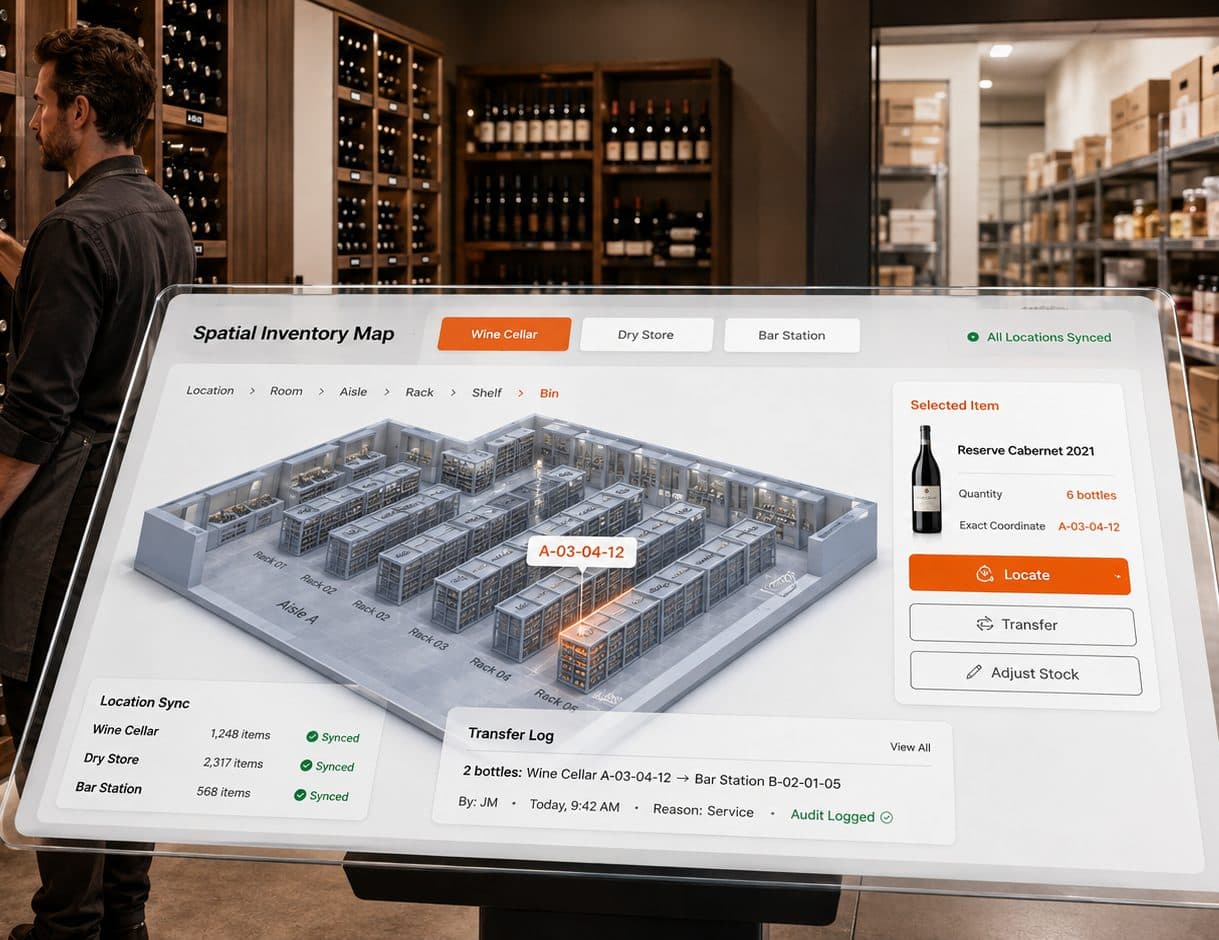
Our spatial mapping tool allows you to replicate your physical storage structure digitally, so a bottle sitting in a deep bin is far easier to track down, with aisle, rack and shelf-level precision.
Six connected pieces, which the benefit strip on this page names as the wine catalogue, cellar stock, vintages, by the glass, pairings and beverage reports. In practice that means: a list where each wine is held as its own record with a producer, a vintage year, a bottle format and a cellar location; stock counts kept against those records rather than against a single generic line called wine; an open-bottle view for anything poured by the glass, showing how much of a bottle the system believes is left, how long it has been open and how many pours that works out to at the pour size you set; a place to store your own pairing notes against dishes so they reach the floor; a spatial map of where bottles physically sit, down to room, aisle, rack and shelf, with a log of transfers between them; and reporting over the top of all of it. Two things are worth setting out before the rest of the answers. Every figure printed on this page is sample data used to show the shape of a screen — the fourteen bottles in Vault A, the two-bottle low-stock flag, the 525ml remaining, the 4.5 pours left, the variance of half a pour, the eighteen and twenty dollar glass prices. None of it is a projection of your results and none of it is a recommended target. And every producer name on this page is invented; the comps originally carried real wine houses as decorative filler, which implies an endorsement that does not exist, so they were replaced. The grape varieties, appellations and bottle formats are generic or geographic terms and are real. The second thing is the honest framing of the whole module, and most of what follows is really about it: this is a very detailed ledger of the bottles your team tells it about, kept current by the people opening and pouring them.
As separate records, which is the point of the section. A wine is not one row with a quantity against it. The 2018 of a given bottling and the 2020 of the same bottling are different stock, because they cost different money, drink differently and run out independently, and a cellar that collapses them into a single line will tell you that you have twelve bottles on a night when you have eleven of one vintage and one of another. Bottle format works the same way: a 750ml and a 1.5L magnum of the same wine are two records, not one record with a size attribute you hope somebody reads, because they are priced separately, poured separately and counted separately. Each record also carries where the bottles physically are — Vault A, the reserve cellar, the main cellar, or whatever your own naming is — so a count is a count of a place rather than a count in the abstract. Stock level is the flag your team actually watches, and the low-stock marker in the comp is simply a threshold you set being crossed; it is a prompt to go and look, not a reorder decision, and nothing on this page places an order for you. On getting the list in: this page describes no wine database, no distributor catalogue, no label-scanning service and no import from an outside system, so we are not going to imply one. Setting up a serious list is real data-entry work, and if you have several hundred references sitting in a spreadsheet today, ask sales specifically what import routes exist, in writing, before you plan the changeover — that is a scoping question with a real answer and it belongs with them rather than in a paragraph here. Two habits are worth adopting on day one, because they are painful to retrofit: decide your producer and appellation spelling once and stick to it, since a list where the same house is entered three ways will not count correctly no matter how good the software is, and enter the vintage as a plain four-digit year rather than folding it into the wine name.
No, and this is the most important sentence on the page. Vertex does not measure liquid. There is nothing in the bottle, nothing weighing it and nothing watching the bar. That 525ml is arithmetic: a 750ml bottle, minus the pours somebody recorded, at the pour size you configured. The 70% and the 4.5 remaining pours are the same arithmetic expressed two other ways. Where a pour happened and was not rung in, the number on the screen stays where it was and is now wrong by exactly that much. The design's line — "Stop guessing how many glasses are left" — overstates it; what you get is a shared, running count of what your team has recorded, which is a genuine improvement on a mark on the label and a memory, and is not the same as knowing. It follows that a configured pour size is a target rather than a measurement. Setting 150ml against a 750ml bottle says you intend five pours from it; whether you get five depends on the hand holding the bottle, the glassware, the tail of the bottle nobody wants to serve and the taste poured for a guest who was deciding. That is what the yield analysis on this screen is for, and it is refreshingly blunt about it: the sample shows 19.5 pours the system was told about against a physical count of 19 bottles, a variance of half a pour. Read that variance as a question, not a verdict. Overpouring, an unrecorded glass, a comp nobody logged, breakage, a bottle that oxidised and went down the sink without anyone opening the screen, a miscount at the shelf and a genuine data-entry slip all arrive in that one number looking identical, and the software cannot tell you which it was. It shows you where to go and ask. We are not going to tell you it reduces your shrinkage — what happens after the variance appears is a management job that belongs to your venue, not to a piece of software. The same caution applies to the freshness side. The design calls these "real-time oxidation alerts", which is generous wording for a timer: the clock starts when somebody marks the bottle open and rings at the interval you configure — the comp shows a scale of 0h, 4h, 8h and 12h+ with a notification set at eight hours. It counts hours since a recorded event. It does not taste the wine, does not know your cellar temperature, does not account for whether the bottle was gassed, re-corked or left on a warm pass, and cannot tell you a wine is still good. A sommelier's nose decides that; the timer only makes sure nobody forgets to check. Last, the pricing card in the corner: it carries its own caption in the comp, "Suggestion only. Requires staff approval," and that is the honest reading of it. A suggested glass price is a calculation from figures you entered, waiting for a person to accept or reject it. It is not a market rate, it is not a recommendation to charge more, and nothing here promises it improves your margin.
No. Vertex has no palate, no nose and no opinion, and any beverage tool that claims otherwise is selling you something it cannot deliver. What this section does is store the pairings your own people decide on and put them where they are useful. Somebody on your team — the sommelier, the beverage manager, whoever owns the list — decides that a particular dish goes with a particular wine, writes the reason in their own words, and that note is attached to the dish so it reaches the floor: the new starter on their third shift, the server covering a section that is not theirs, the person taking a table at nine o'clock when the sommelier is on the other side of the room. The cards in the comp are exactly that shape — a dish paired with a wine, a short tasting note explaining why, a badge marking it as a staff pick and a line crediting the people who put it forward. Every one of those is a human judgement being recorded and distributed, not generated. That framing matters for two practical reasons. The first is that the note is only as current as the person maintaining it: when the vintage changes, when the wine sells through, when the chef reworks the dish, the pairing needs revisiting, and a stale pairing confidently displayed on a terminal is worse than none at all because it gets believed. Someone has to own that list the way someone owns the wine list itself. The second is scope. The design labels this area "Sommelier Assistant", and the operative word is assistant — it distributes your expertise, it does not supply any. It will not tell you what to pour with a new dish, will not flag a pairing as wrong, and does not carry ratings, medals or critic scores of any kind, by deliberate design. If your venue does not have somebody making these calls today, this section will be empty, and software will not fill it. The value on offer is that one person's knowledge stops being a bottleneck at the pass and starts being available to every server on the floor at the moment a guest asks.
The idea is to mirror your physical storage rather than invent a filing system alongside it. You describe the cellar as it exists — rooms, aisles, racks, shelves, bins, and the service stations out front like the main bar or a floor cabinet — and every bottle record points at a place in that structure. The value is mundane and real: a location is a coordinate somebody can walk to, so pulling a bottle for table nine and doing a Tuesday count both stop being a search. Be clear-eyed about what it costs, though. The design's promise that you will "never lose a bottle in a deep bin again" is the design's, not ours. A map is a maintained artefact, and it is right only while the shelf and the record agree. Reorganise a rack on a slow afternoon, move a case to make room for a delivery, put six bottles on the bar for a private dinner and put four back — do any of that without updating the map and it now sends people to the wrong shelf, with all the authority of a screen. Whoever owns the cellar owns the map, and the moment to update it is when the bottles move. Across sites, the page says stock is synchronised between locations, which means each site's counts and cellar structure are visible in one place rather than in three spreadsheets, and a group buyer can see that the bottle a guest wants is at another venue. Read that as visibility, not as a promise about timing: this page states no sync interval, no offline behaviour and no conflict handling, so if it matters how the system behaves when a site's connection drops mid-count — and in a multi-site group it usually does — ask sales that specific question and get the answer in writing before you design a routine around it. On transfers, what the log records is the movement somebody entered: which bottles, from where, to where, by whom and when, so a case that left the main cellar for the second site has a trail behind it instead of a gap in two counts. That is genuinely useful for settling the ordinary argument about where six bottles went. What it is not is proof. The page describes an audit trail and nothing more, and we are not going to tell you it is tamper-proof, immutable or admissible anywhere, because that is not a claim this page makes and it is not one to take on trust from a marketing page. Like everything else in this module, it records what a person entered — a bottle carried between rooms and not logged leaves no trace at all, and the trail is worth exactly as much as the discipline behind it. If you need a specific evidential or retention standard met, that is a question for sales and for your own adviser, in writing, against the standard you actually have to meet.
No, and please treat any beverage system that says yes with real suspicion. Alcohol is a licensed trade and the obligations attached to it — what your licence permits, which hours you may serve, what you must record and retain, how duty or excise is assessed and reported, what age checks you must perform and how you must evidence them, what responsible-service training your staff need — are set by your jurisdiction and your licensing authority, they differ between countries and often between cities, and they change. You will not find a rate, a threshold, an age, a permitted hour, a licence condition or a retention period stated anywhere on this page or in this answer, because stating one as fact would be wrong somewhere and possibly wrong where you are. Vertex does not monitor those rules, does not update itself when they move, does not verify anybody's age and does not perform a check at the point of service. What it can do is hold the records that make your own compliance work less painful. A list where each vintage and bottle format is a separate record, counts by location, a log of what moved where and when, and reporting over stock and pours is a much better starting point for a stock declaration, a duty return or an internal review than a shoebox and a spreadsheet — because the underlying detail exists and can be traced. That is a book-keeping benefit, and it is a genuine one. It is emphatically not the same as being compliant, and the gap between them is filled by your people, your procedures and professional advice. Deciding what you are required to record, keeping the configuration current when the rules move, training your staff, checking identification and filing what is due stays with you, your licensee and your adviser. If a specific obligation has to be satisfied by the software itself rather than around it — a particular record format, a particular retention period, a particular report a regulator asks for — put that to sales as a written requirement before you buy, phrased in the terms your own regulator uses, and confirm the answer rather than assuming this page covers it.

Tell us how your list really works — how many vintages and formats you carry, which rooms and bins you count, who logs a pour at eight on a Saturday, what happens to a case that moves between sites — and we will show you what Vertex would record and what it would still leave to your team, before you commit to anything.